
Navigating to the Statistics
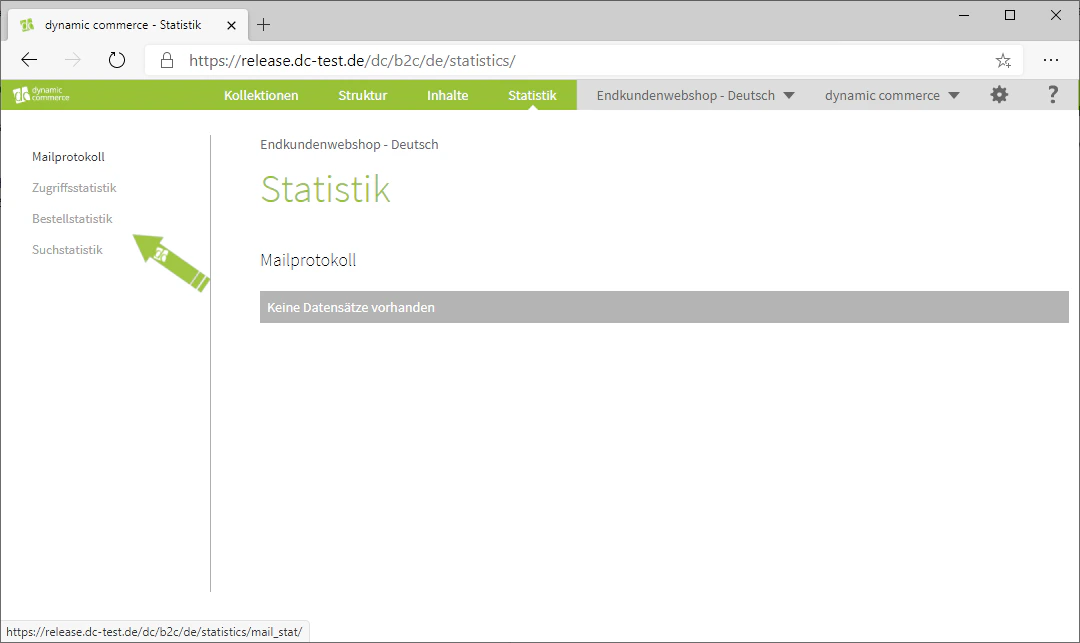
You can access the individual statistics via the Statistics tab. There you can select the respective statistic from the list.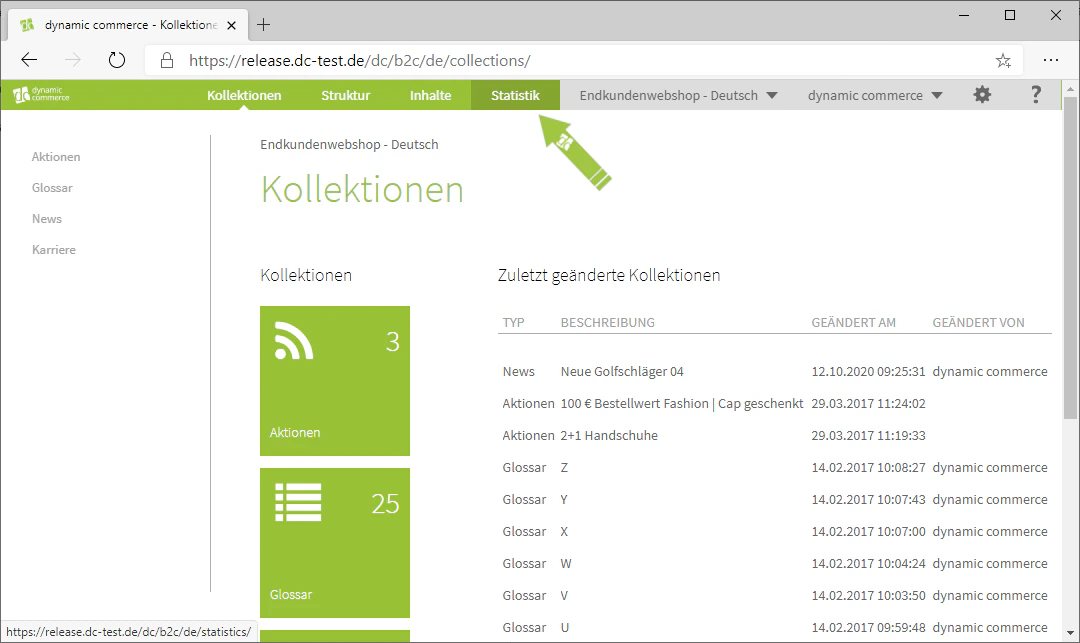
The Mail Log
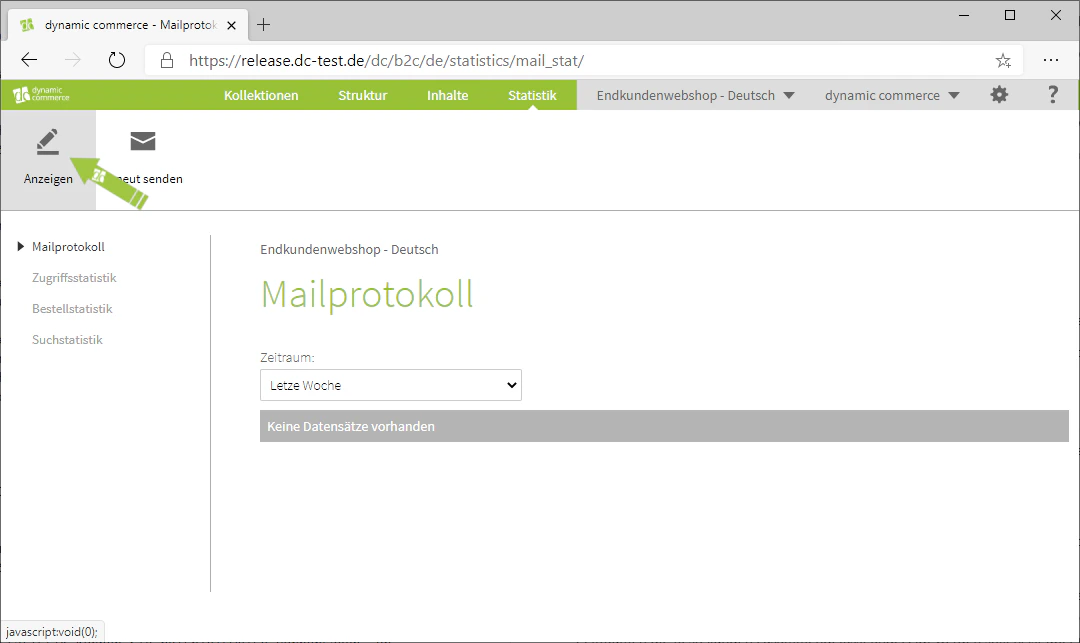
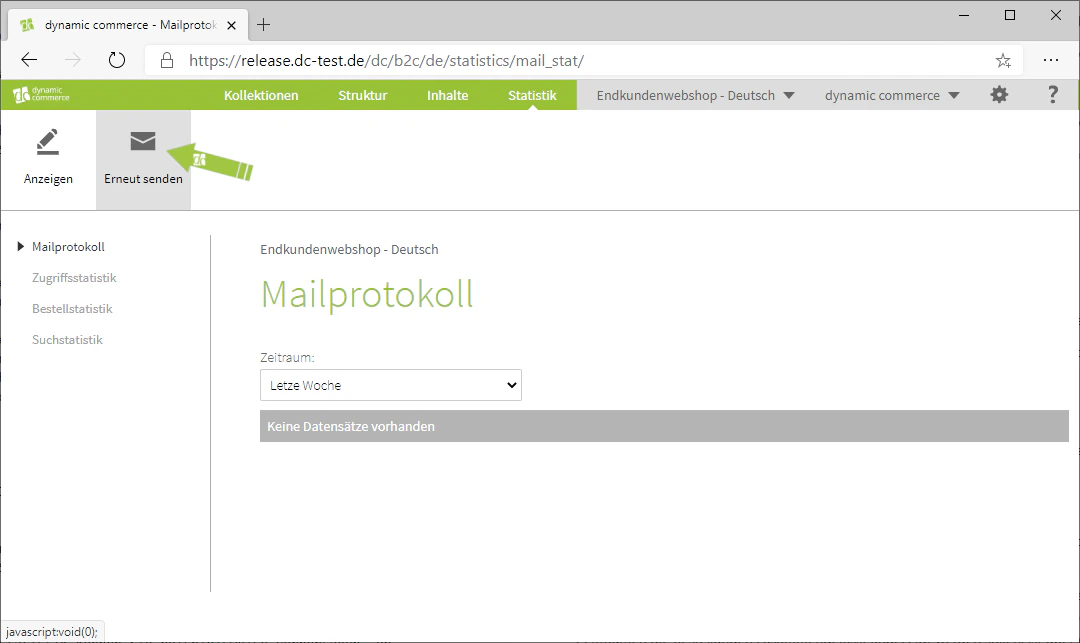
The mail log shows you which e-mails have been sent from your web shop. For example, order and shipping confirmations that were automatically sent to your customers would be listed here. This allows you to check, in the event of problems with an order, what information the respective customer has already received. By clicking “Display” in the upper left, you can view the selected sent mail. You can also resend this mail by clicking on the button to the right of “Display”.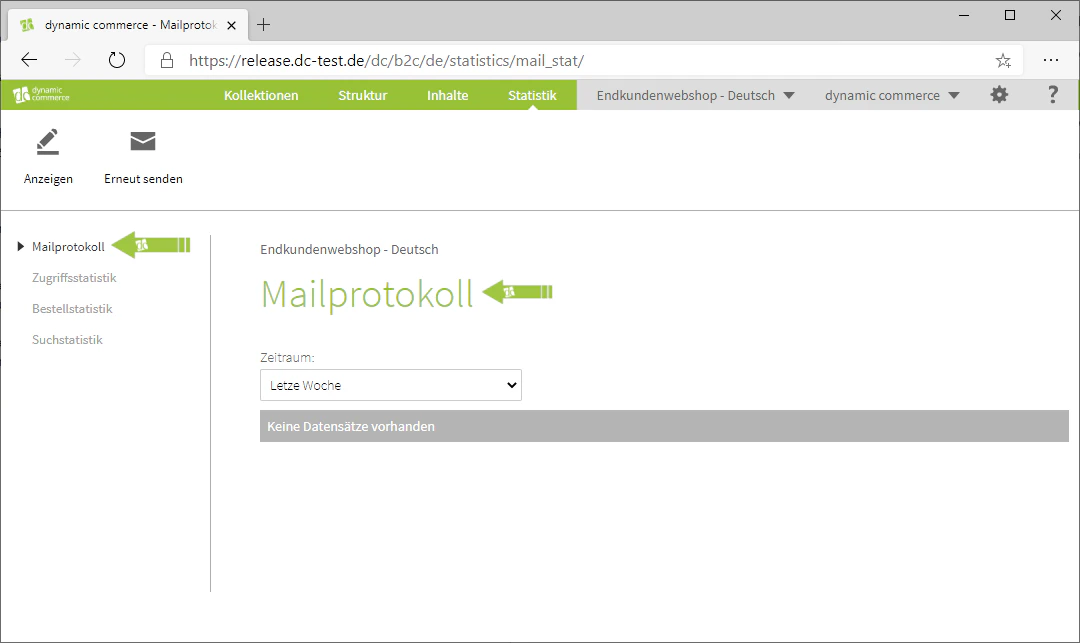
The Access Statistics
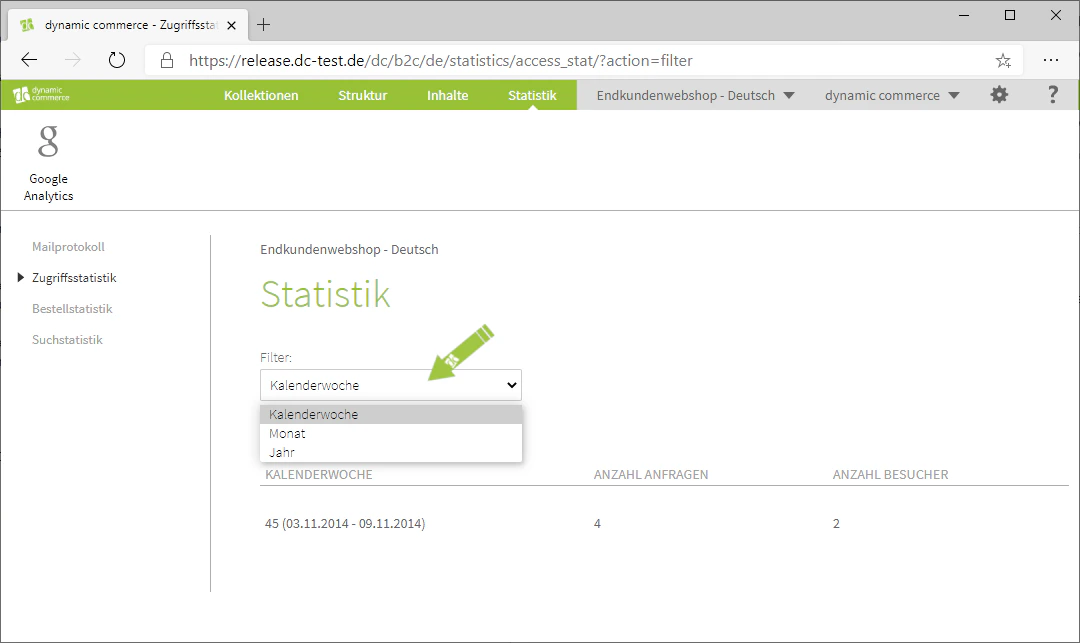
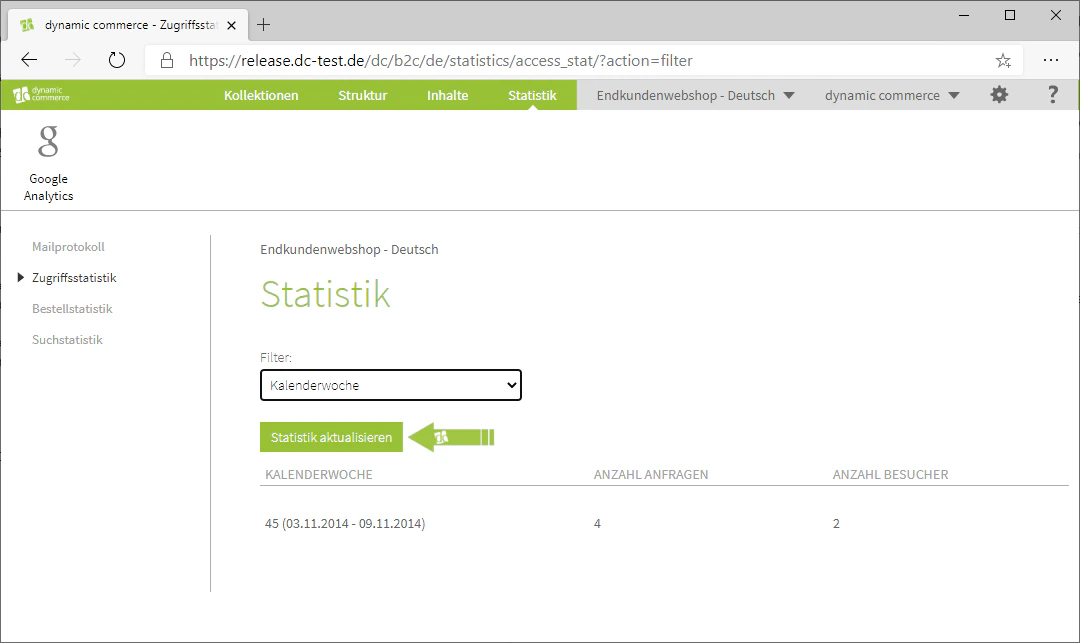
The access statistics show you how many visitors have accessed your site. You can filter these by various time periods using the drop-down labelled “Filter”, which is located below the heading “Statistics”. You can also refresh the statistics by clicking the button below it.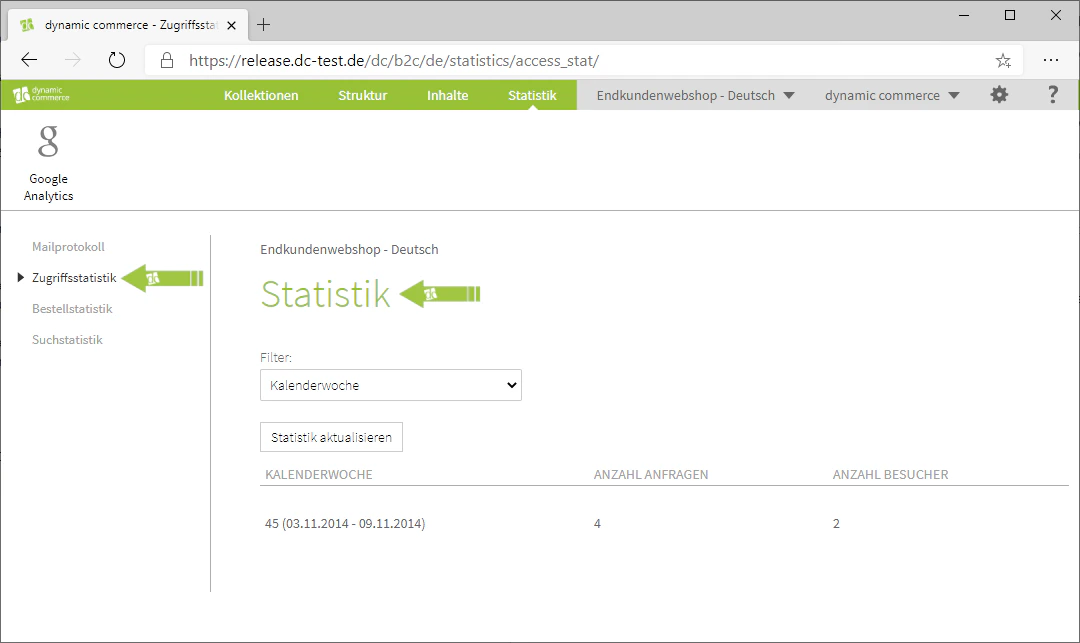
The Order Statistics
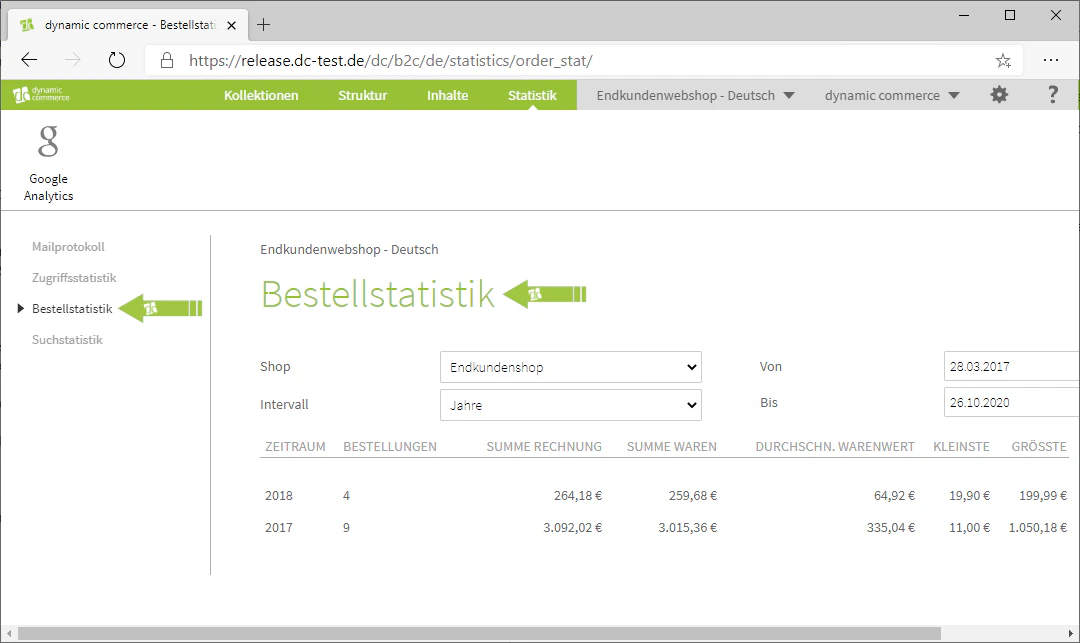
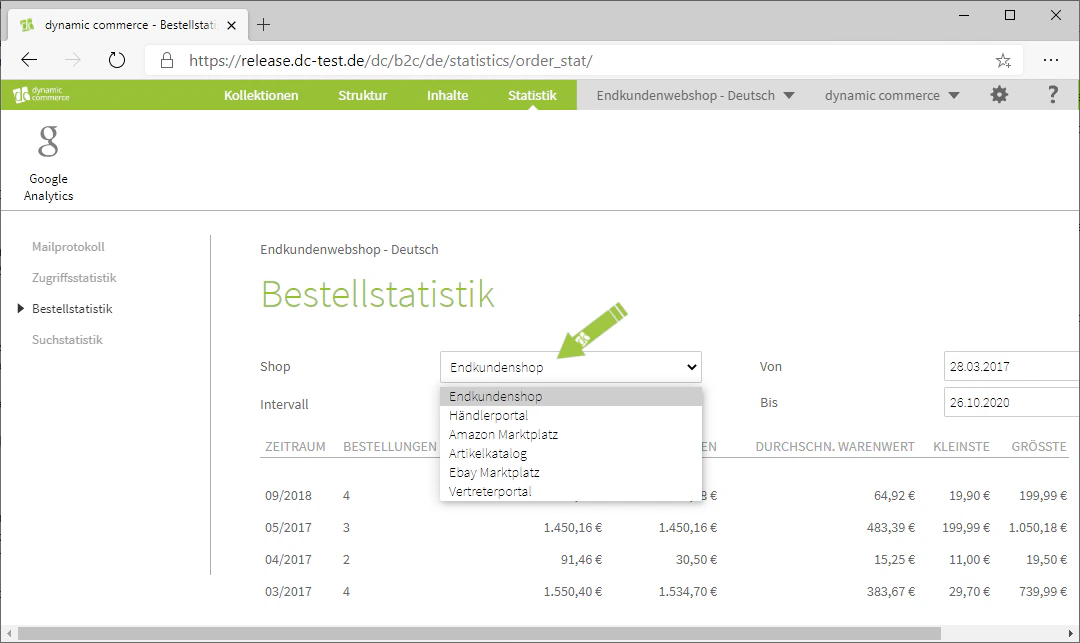
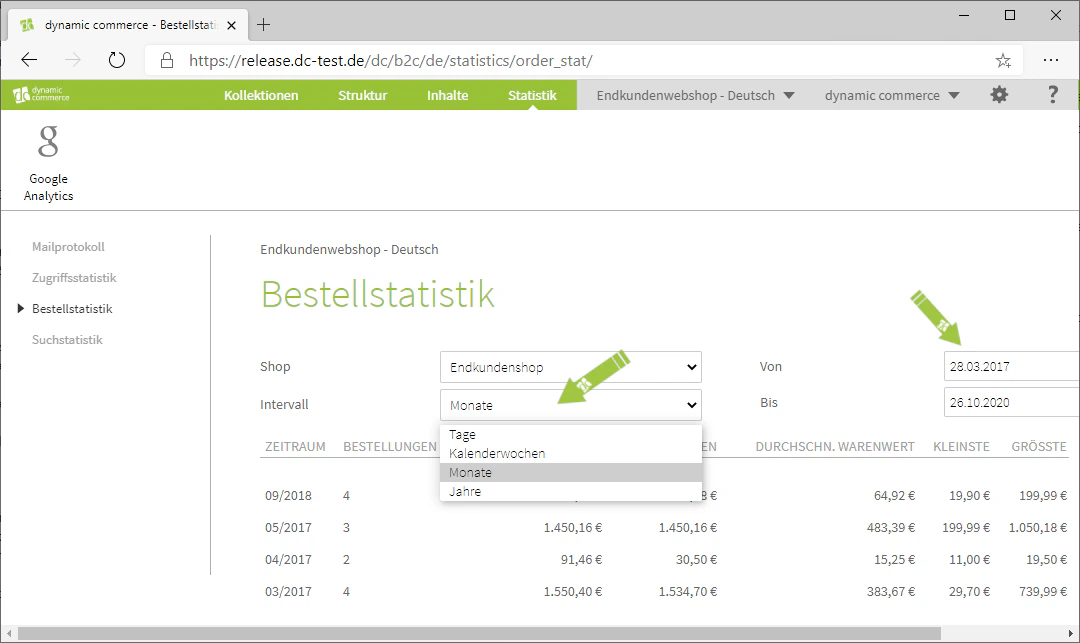
In the order statistics, you can see how many orders have been placed in your individual web shops. In addition, the goods value and invoice value of all orders is displayed. You can filter this statistic again via the settings below the heading “Order Statistics”. Using the “Shop” drop-down, you can select which shop should be displayed. The interval at which orders are displayed in summary form can also be adjusted via the corresponding drop-down. To the right of this, you can specify the time period for which the statistic should be generated.The order statistics is an important tool that you should monitor regularly. It can be used, for example, to determine when your individual web shops have a peak season or when fewer orders are to be expected. In combination with the access statistics, you can also calculate how many of your visitors actually place an order. Depending on the results, you can adjust your marketing strategies accordingly.
The Search Statistics
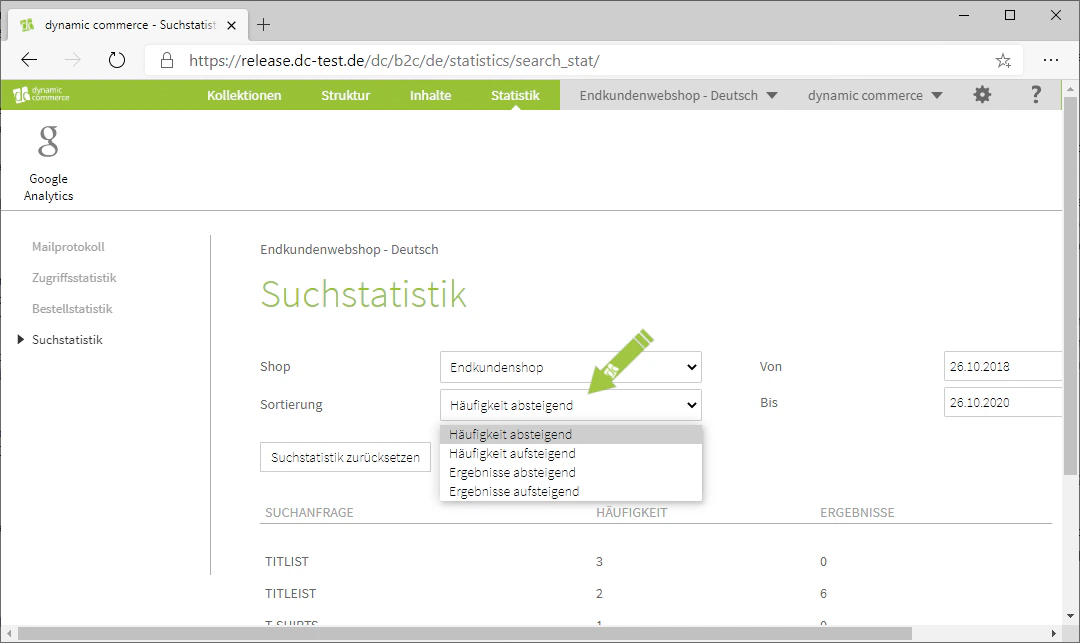
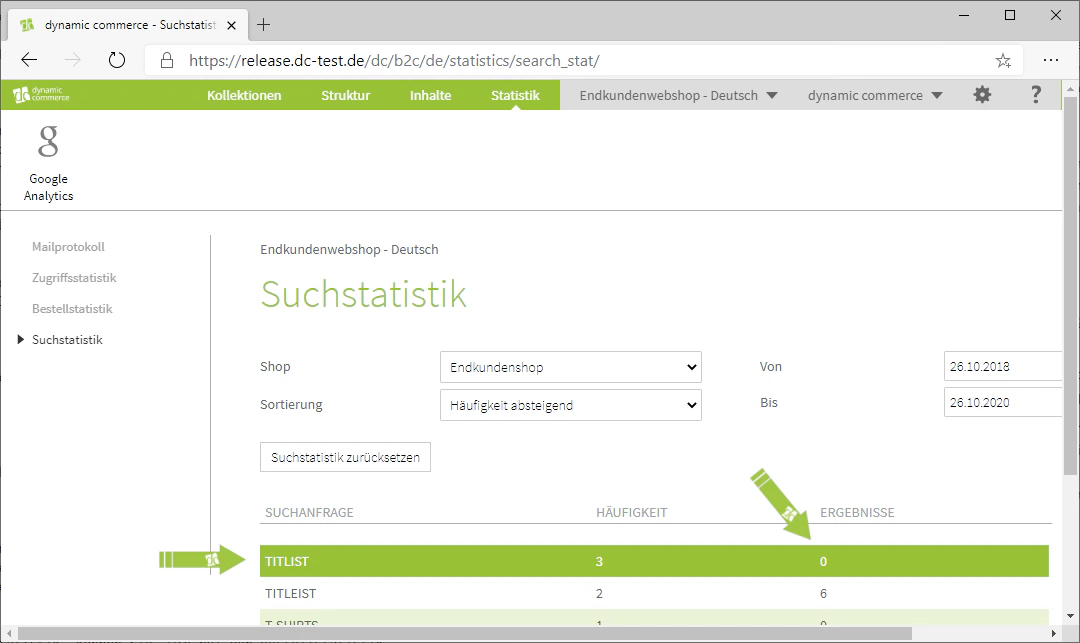
The search statistics show you which terms visitors to your website have entered into the search. For each term, the frequency of the search query and the number of results found by the search are also recorded. Below the heading “Search Statistics”, you can filter the results just as with the order statistics. As a special feature here, you can adjust the sorting by frequency or results. The search statistics are particularly interesting for the articles you offer. In general, you should pay attention to search queries that return no results. If, for example, a particular brand is frequently searched for that you do not yet offer, you might consider introducing it to your product range.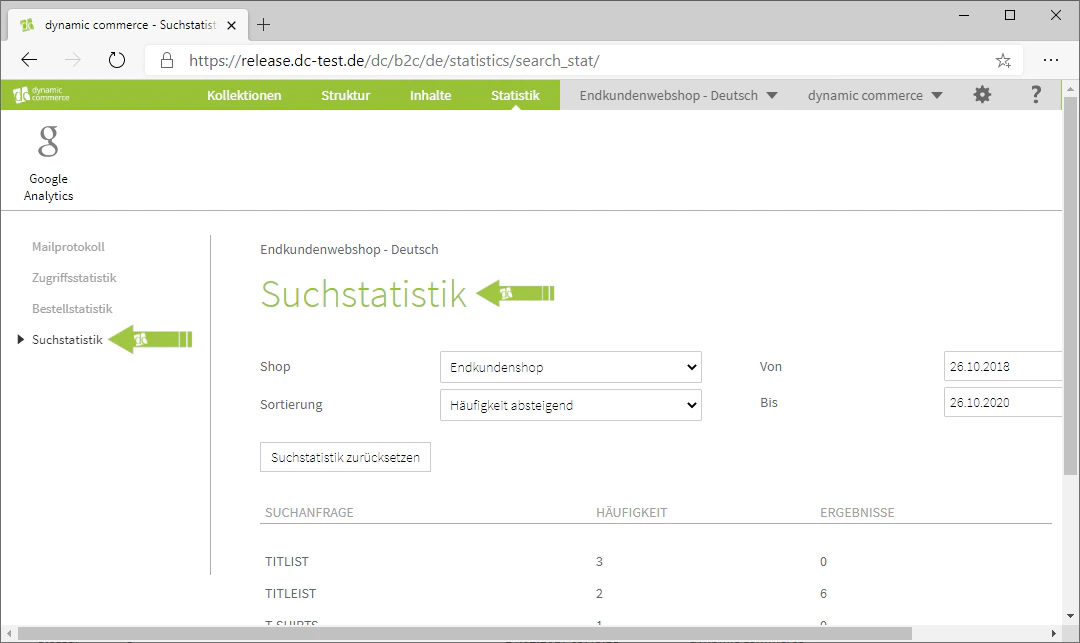
Related Topics
General Navigation in the CMS
Get your initial bearings in the CMS.
Creating Websites
Create new websites and web shops.
Creating and Editing Content
Create and maintain content on pages.
Help
Support and further information.